
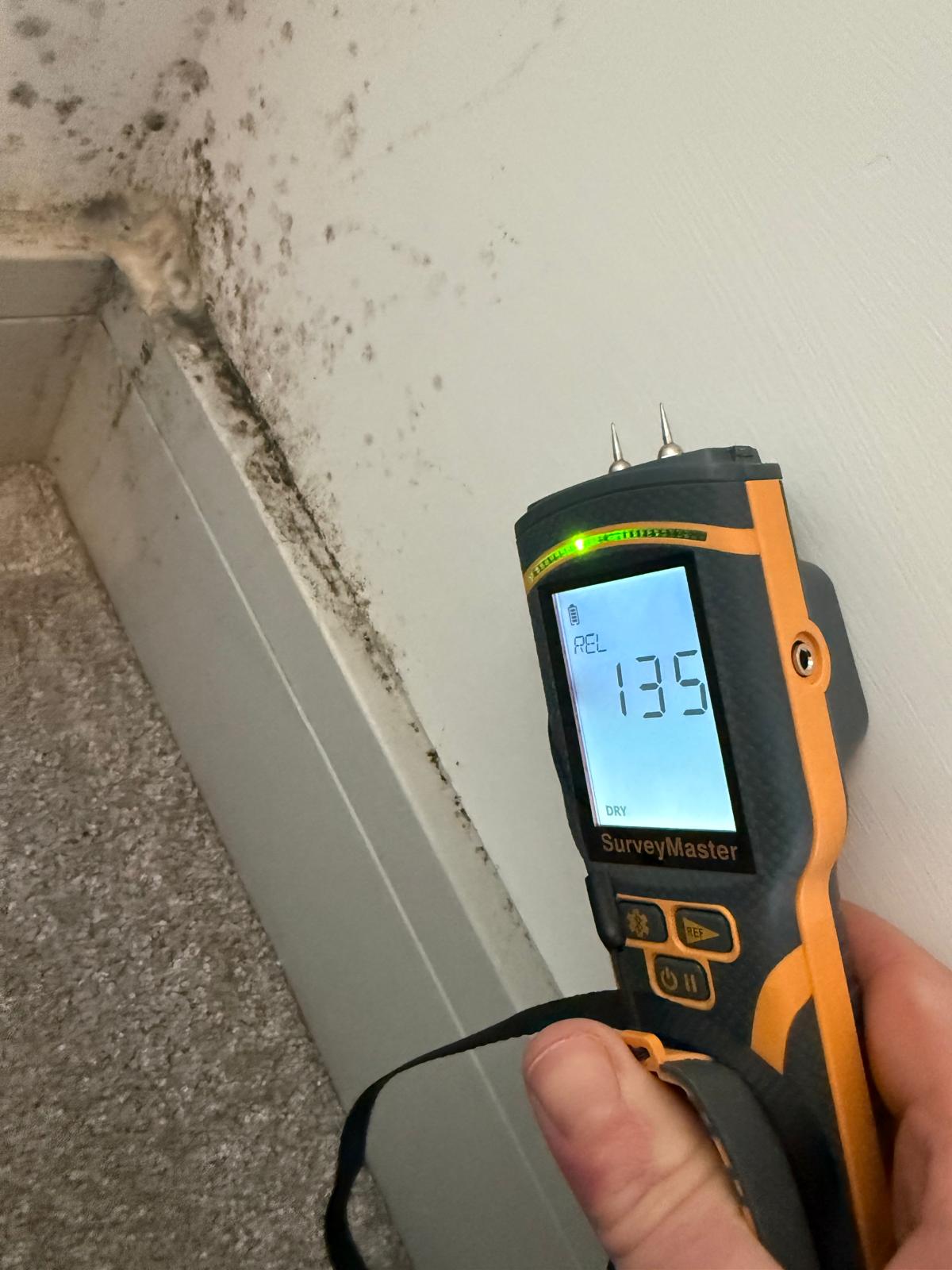
We have prepared guidance on black spot mould, a common issue in homes across the UK, particularly during the colder months. As specialists in damp, timber, and building maintenance, we frequently see how mould problems escalate when moisture in the air is not properly understood or managed.
The key message is simple:
- Mould is a symptom of excess moisture in a building, not the root problem.
- When landlords and tenants work together, most mould issues can be prevented or resolved early.
⸻
What Is Black Spot Mould?
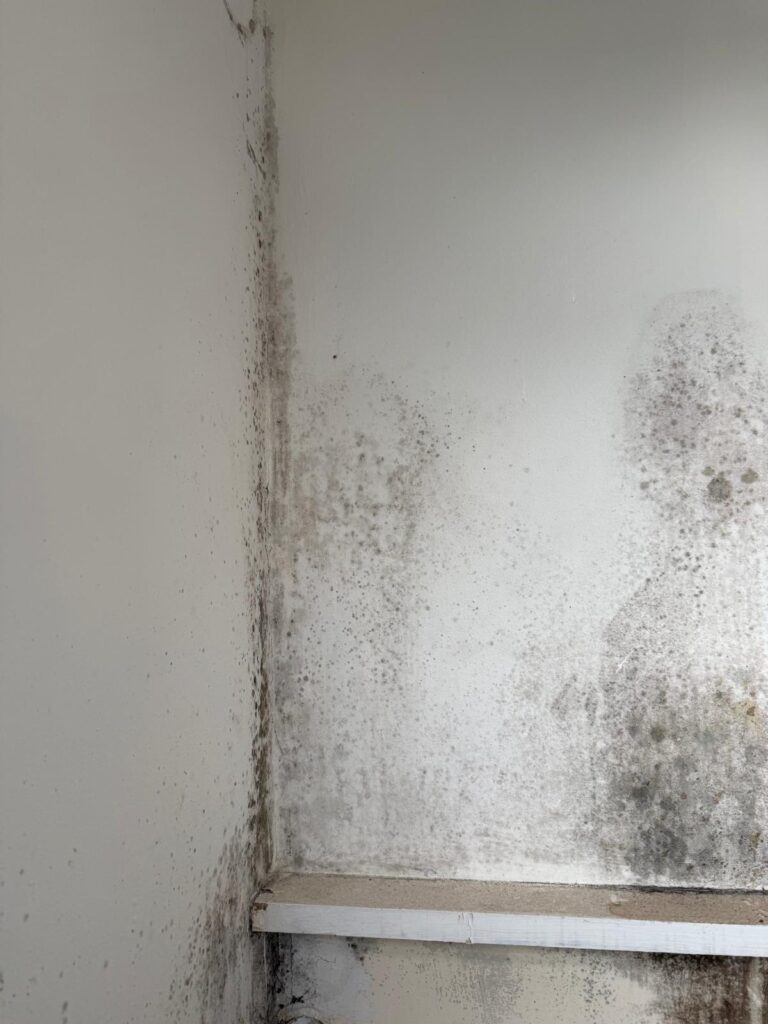
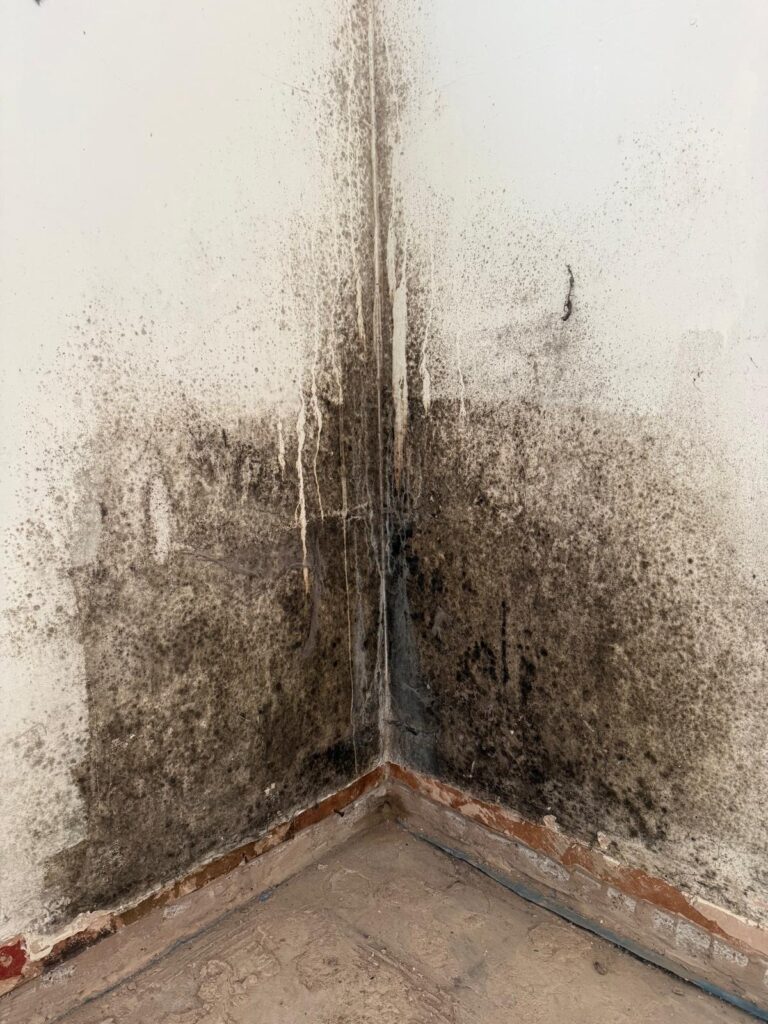
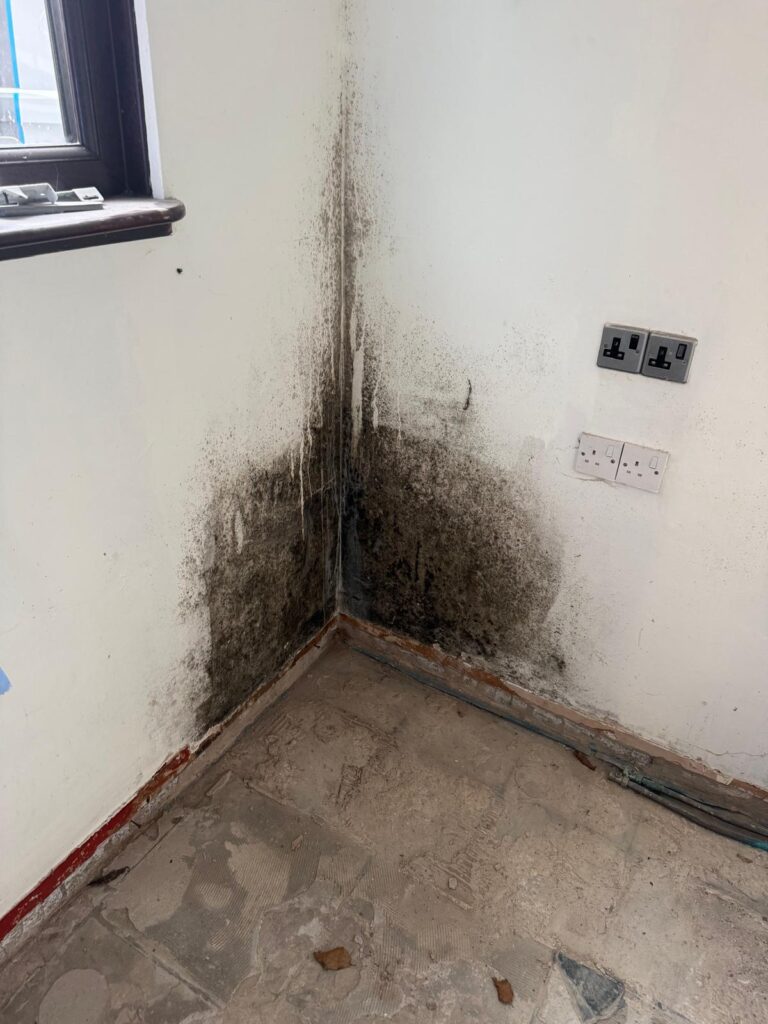
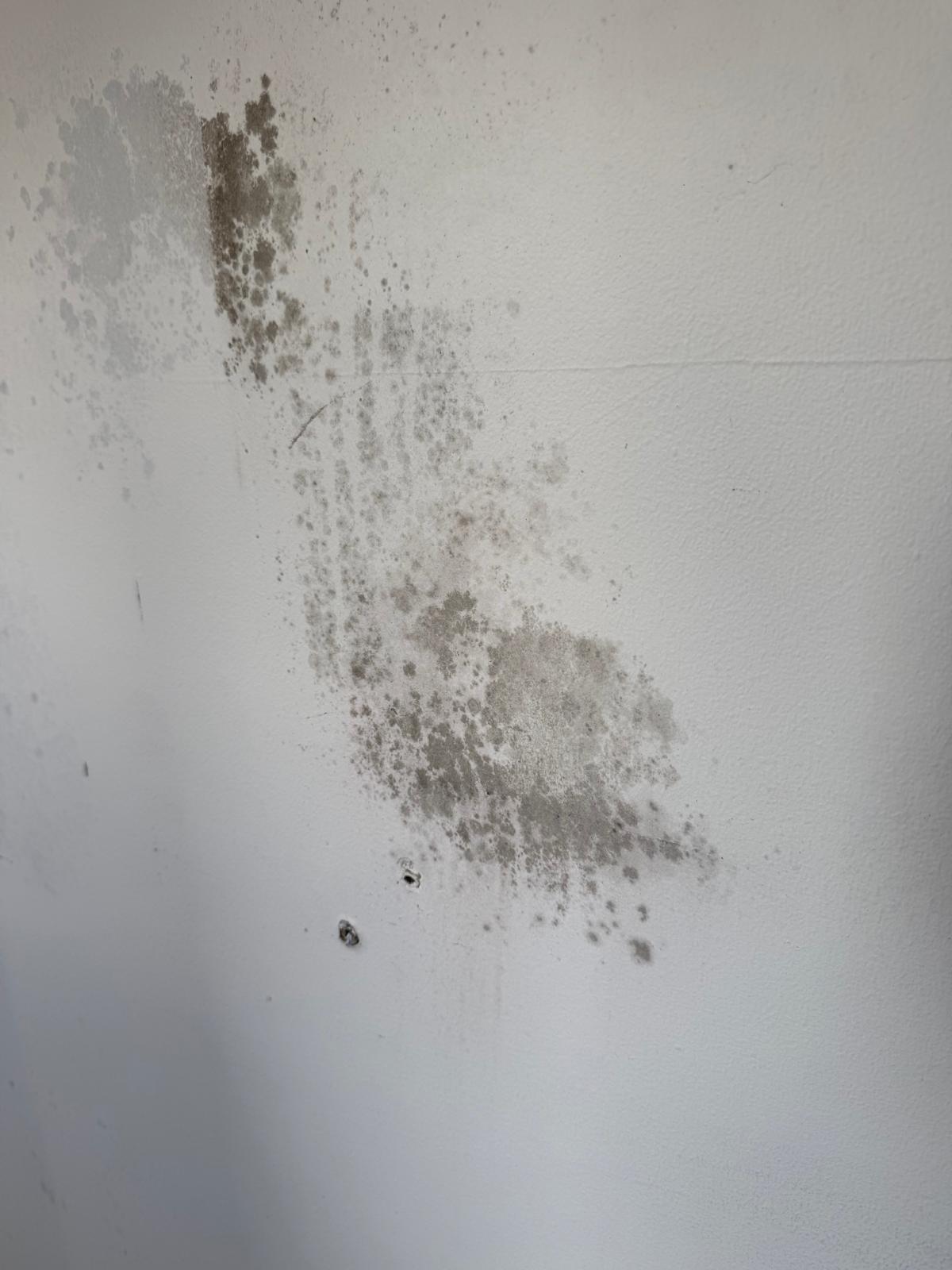
Black spot mould is a surface mould that appears as dark speckled patches on walls, ceilings, window reveals, silicone sealant and behind furniture. It thrives in damp environments with limited airflow and is most commonly linked to condensation rather than leaks.
While not all black mould is “toxic”, exposure can aggravate asthma, allergies and respiratory conditions, particularly in children, the elderly and vulnerable occupants. Because of these risks, mould should never be ignored.
⸻
Why Black Spot Mould Forms – Understanding Condensation
One of the biggest challenges with mould is that you can’t see moisture in the air.
A simple way to understand condensation is this:
When you take a cold can out of the fridge, water droplets quickly form on the outside. That water hasn’t leaked out — it comes from moisture in the air cooling on a cold surface.
The same thing happens in homes. Everyday activities such as:
- cooking
- showering
- bathing
- drying clothes
- even breathing
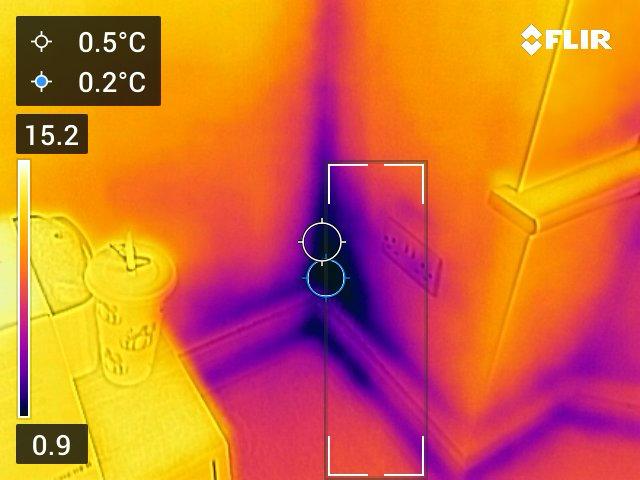
release moisture into the air. When that warm, moist air hits cold walls, windows or ceilings, condensation forms. If this happens repeatedly and can’t dry out, black spot mould develops.
⸻
Common Causes of Black Spot Mould in UK Homes
Based on guidance from the Property Care Association (PCA)
The most common causes are:
- Condensation from daily living
- Poor or inadequate ventilation
- Cold internal surfaces caused by limited insulation
- Blocked or broken extractor fans
- Structural defects such as leaks or defective gutters
- Consistently high indoor humidity levels
In many properties, mould is caused by a combination of building factors and lifestyle moisture, which is why cooperation is essential.
Click here to visit our black spot mould treatment page.
⸻
When Is Black Spot Mould Most Likely?
In Bolton, Manchester and the wider North West, mould problems peak between November and March.
During winter:
- Homes are sealed to keep heat in
- Heating increases warm, moist air indoors,
- Cold external walls increase condensation risk
Extra care during these months can significantly reduce mould growth.
⸻
Preventing Black Spot Mould – A Shared Responsibility
Landlord Responsibilities
Landlords are responsible for:
- Providing effective ventilation (kitchen and bathroom extractors)
- Repairing leaks, roofs, guttering and plumbing
- Ensuring the property can be heated adequately
- Investigating recurring mould properly
- Addressing root causes, not just repainting
Tenant Responsibilities
Tenants should:
- Use ventilation systems provided
- Heat the property reasonably and consistently
- Manage everyday moisture where possible
- Report mould or damp early
- Avoid blocking airflow around radiators and walls
Neither party can prevent mould alone — it requires teamwork.
⸻
Simple Steps Tenants Can Take to Reduce Condensation
Small daily actions make a big difference:
- Open windows for 10–15 minutes daily, even in winter
- Always use extractor fans during cooking and showering
- Leave fans running for a short time after use
- Dry clothes outdoors where possible
- If drying indoors, use the bathroom with the extractor running or a well-ventilated room
- Keep lids on pans when cooking
- Wipe away visible condensation on windows
- Avoid pushing furniture tightly against external walls
These steps help moisture escape before mould can develop.
⸻
Monitoring Humidity – A Simple but Effective Solution
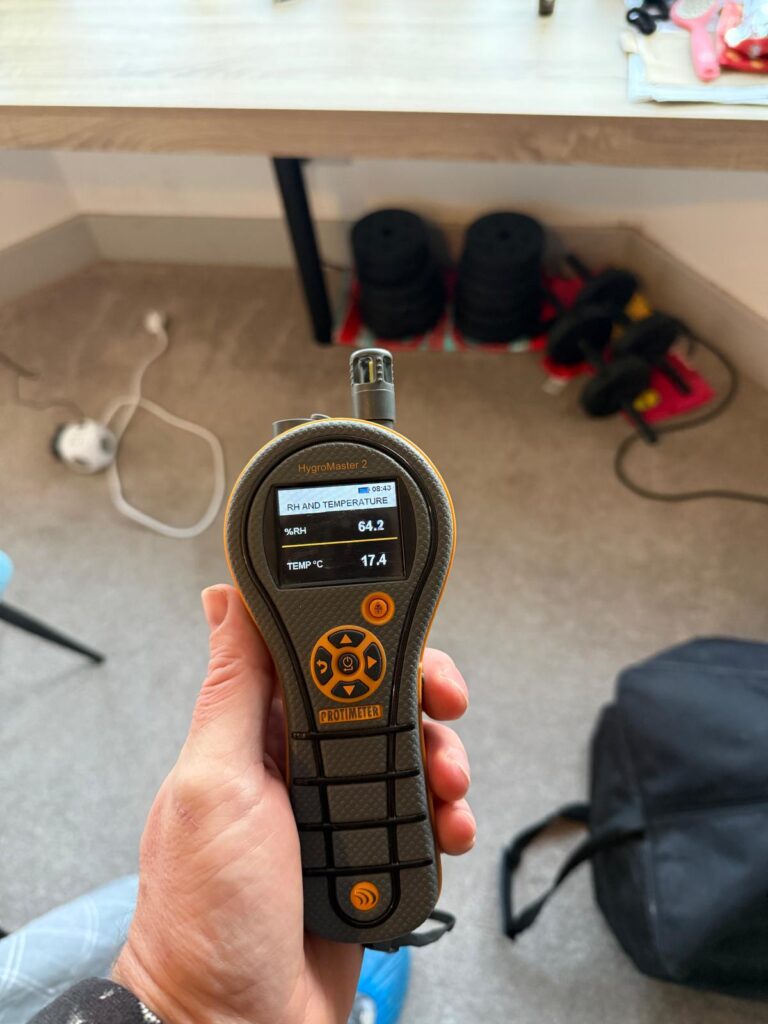
Indoor humidity should ideally be kept between 40–60%.
Above this level, the risk of mould increases significantly.
We recommend using a cheap digital hygrometer (often under £10). It allows both landlords and tenants to see humidity levels clearly — something you can’t judge by feel alone. This approach is widely supported by PCA guidance.
⸻
Black Spot Mould Advice
If mould appears:
- Act early — mould can spread quickly
- Take photos and note locations
- Identify whether it may be condensation-related or linked to a defect
- Report it promptly to the landlord or letting agent in writing
Early reporting protects health and prevents more serious damage.
⸻
Dealing With Visible Mould
Visible mould should only be treated alongside moisture control.
For small areas:
- Use a good-quality proprietary mould remover containing a fungicidal agent
- Follow manufacturer instructions carefully
- Wear gloves and ventilate the room well
Repeated cleaning without addressing the cause will not solve the problem long-term.
⸻
Awab’s Law – What Landlords and Tenants Need to Know
Awab’s Law strengthens tenant protections around damp and mould in rented homes.
Key points include:
- Landlords must investigate reports of damp and mould promptly
- Serious hazards must be addressed within legally defined timeframes
- Mould linked to health risks is treated as a priority
- Landlords cannot dismiss issues as “lifestyle” without proper investigation
The law reinforces that homes must be safe and fit for habitation, and mould is now taken far more seriously by local authorities.
⸻
What If Mould Isn’t Being Addressed?
If mould persists and reasonable action isn’t taken:
- Keep records of all communication
- Allow reasonable time for response
- Contact your local council’s Environmental Health Department
- Seek advice from Shelter or Citizens Advice
Tenants are legally protected from retaliatory eviction when reporting genuine health hazards.
Professional Damp and Mould Surveys
⸻
Bolton, Manchester & Surrounding Areas
If mould problems keep returning, a professional assessment can identify whether the cause is condensation, insulation issues, ventilation failures or structural defects.
Early diagnosis saves money, protects health and prevents disputes.
Click here to visit our dry rot treatment page.